MENU
Gucci: Staying Relevant in Luxury over a century
Developed a strategic marketing case study analyzing Gucci's long-term growth through consumer segmentation, Customer Lifetime Value (CLV), and marketing investment strategy to identify opportunities for sustainable revenue growth.
01 Consumer Segmentation
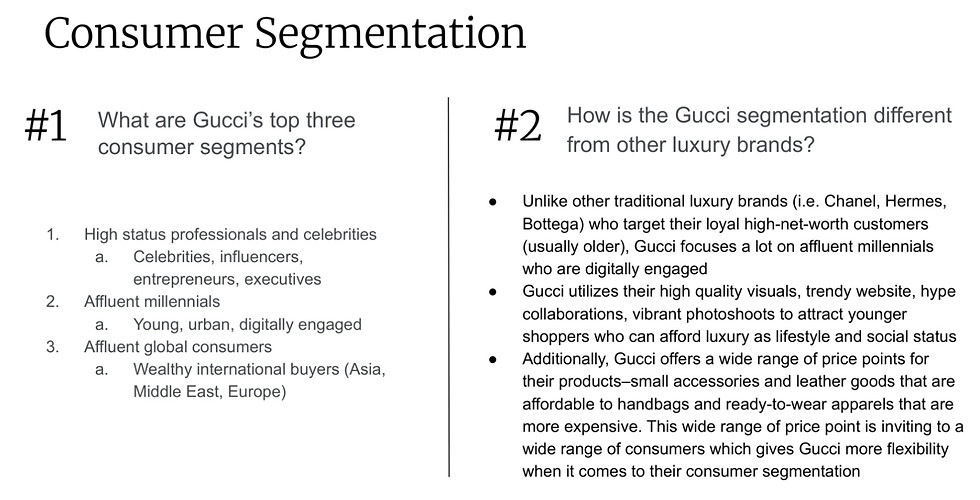
Identified Gucci’s core audiences and examined how its targeting differs from traditional luxury competitors. The analysis highlighted affluent millennials, high-status professionals and celebrities, and affluent global consumers, with emphasis on Gucci’s broader price range and digitally driven appeal.

02 CLV & Financial Modeling
Built a Customer Lifetime Value model across four consumer segments by estimating sales contribution, average order value (AOV), purchase frequency, and promotion costs. The analysis projected CLVs ranging from $5,650 to $15,500, with high-status professionals generating the highest lifetime value despite representing only 15% of sales.

03 Recommendations
Translated the quantitative analysis into marketing recommendations by identifying where Gucci should optimize promotional spending. Based on the CLV model, I recommended prioritizing investment across the 50% sales-driving affluent millennial segment while maintaining premium engagement with the $15,500 CLV high-status consumer segment to maximize long-term profitability.

04 Strategic Analysis
Concluded the case by proposing a balanced long-term growth strategy that leverages Gucci's strongest customer segments while preserving brand exclusivity. The recommendations combined segmentation insights, CLV analysis, and financial assumptions to support more efficient marketing allocation and stronger customer retention.

